


SCULPTURES OF ICONIC PEOPLE
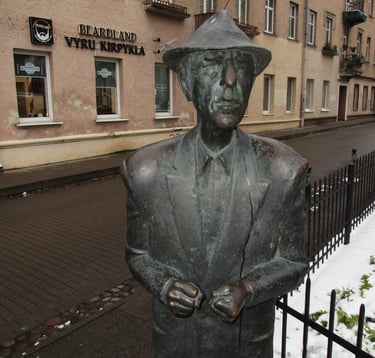
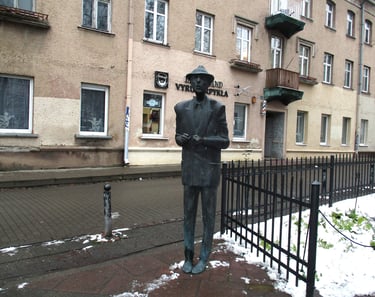
Sculpture of Leonard Cohen
The sculpture of Leonard Cohen standing in Vilnius Old Town enriches the city's cultural map not only as a tribute to the famous artist, but also as a subtle nod to the power of popular music to shape collective memory. It serves as a reminder of L. Cohen as a performer, whose work united traditions of folk, pop, and sung poetry. The Norwegian businessman John Afseth, who gifted the sculpture to the city, stated that this present is also part of a larger plan to make Vilnius a world capital of rock 'n' roll.
Leonard Norman Cohen (1934–2016) was one of the most influential songwriters, poets, and romantics of the 20th century. His songs, such as "Hallelujah," "Suzanne," and "So Long, Marianne," have become classics of popular music. Although the performer was born in Montreal, Quebec, he had Lithuanian roots – Leonard Cohen’s mother, Marsha Klonitsky, was born in Kaunas into the family of Rabbi Salomon Klonitsky. Unfortunately, Cohen never visited Lithuania.
The bronze sculpture of Leonard Cohen, begun by Romualdas Kvintas and completed by Martynas Gaubas, resides between Pylimo and Ligoninės streets.
Sculpture of John Lennon
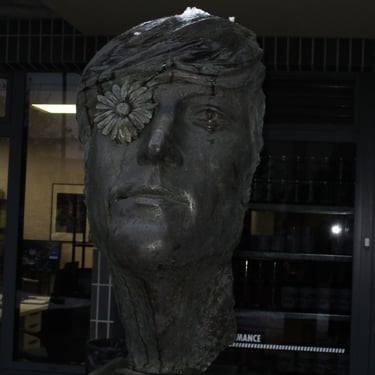
In 2015 in Vilnius, a bronze sculpture of John Lennon was unveiled on a granite pillar, initiated by photographer Saulius Paukštis. The work by sculptor Jonas Gencevičius depicts Lennon with a flower replacing one eye, inspired by an iconic photograph by photographer Robert Whittaker.
John Lennon (1940–1980) was a British music and pop culture legend, best known as the co-founder, lead vocalist, rhythm guitarist, and songwriter of The Beatles, one of the most influential bands in music history. Lennon contributed to many hits such as "I Want to Hold Your Hand" and "Help!" as well as iconic albums like "Sgt. Pepper's Lonely Hearts Club Band" and the "White Album."
Beyond his musical hits, Lennon was renowned for his peaceful protests and activism. After The Beatles disbanded, he wrote songs like "Imagine," a peace anthem uniting people, and "Power to the People," a protest song for equality.
This sculpture is not only a tribute to a musical icon, but also a symbol of Vilnius's openness to global culture and the ideals of freedom.

Sculpture of Frank Zappa
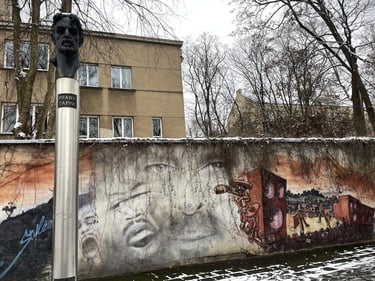
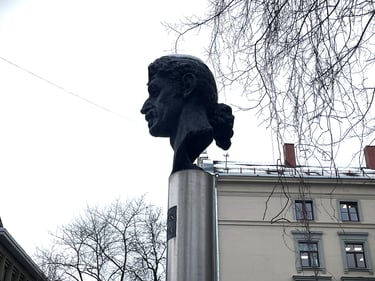
In Vilnius, on Kalinauskas st., stands a rare – now the second in the world – sculpture of Frank Zappa. The bronze bust of the performer, which is already 31 years old, was created by sculptor Konstantinas Bagdonas. Later, Lithuanians made a copy of the sculpture and sent it to the USA, to Baltimore – F. Zappa’s hometown.
Frank Zappa (1940–1993) was an American composer, guitarist, producer and pioneer of experimental music. His music was famous for its complex arrangements, improvisation and satirical expressions. Using his work, he criticized censorship and expressed support for freedom of speech. Also, unlike many stars of the time, he openly criticized drug use and expressed his opposition to it, even in his creative work.
The idea to create such a sculpture came from the photographer Saulius Paukščius (he also initiated the creation of the John Lennon sculpture). In 1991, he visited Los Angeles, where Zappa was living and working at the time. When he returned to Vilnius, S. Paukštys and his friend created and spread the story of how S. Paukštys met the famous musician in America and discussed art. Although Zappa had no direct ties to Lithuania, the sculpture became a symbol of freedom and creative independence for artists in Post-Soviet Vilnius.
The Frank Zappa Square features benches, where visitors can sit and soak in this spirit of creative freedom. It is also a great place to admire the murals and graffiti on the surrounding walls, inspired by the music of that era.

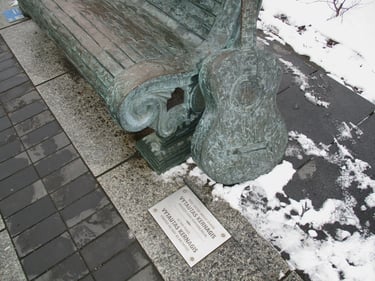
A bench and guitar dedicated to the memory of Vytautas Kernagis
Gedimino pr., 01400 Vilnius, Lukiškės Square
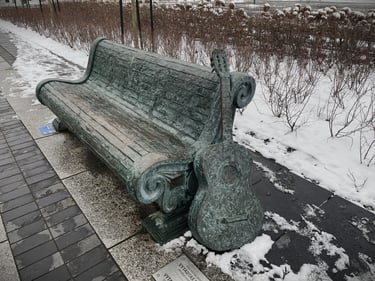
On the main street of Vilnius Old Town – Gediminas Avenue – stands a bronze bench created by sculptor Danielius Sodeika and architect Rimvydas Kazickas.
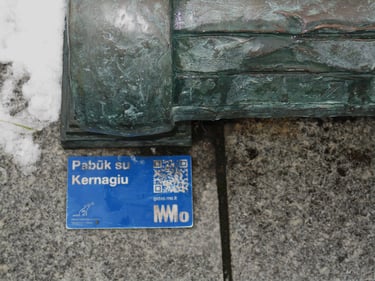
However, this is not just any bench. It is a monument dedicated to the memory of Vytautas Kernagis – a master of sung poetry, an actor and an icon of Lithuanian culture. The guitar on the right is Kernagis’ symbolic instrument and a witness to the performances of his youth in Brodas. In addition, Vilnius residents and visitors can not only view the bench, but also sit down and hear Kernagis’ voice telling about himself and his time (this monument belongs to the “talking sculptures” project).
Vytautas Kernagis (1951–2008) – one of the most famous pioneers and performers of Lithuanian sung poetry, a television presenter, greatly loved (and still loved) for his songs and the spirit of independent art he spread. He has composed more than 200 songs based on his own and other poets' words, and has performed extensively abroad: in the United States, Canada, Australia, France, Great Britain, Norway, Poland, Germany, and elsewhere. In his memory, the Vytautas Kernagis Foundation was established in 2008.
Those who wish to see an even more impressive memory of the maestro, should go to Nida, where sculptor Romualdas Kvintas created a life-size sculpture of V. Kernagis with a guitar. Next to the sculpture, there is a “Bards Square” for small concerts.
Sources:
https://www.bernardinai.lt/mazoji-vilniaus-istorija-l-coheno-skulptura/
https://www.lrt.lt/naujienos/nuomones/3/1518836/martynas-mockus-franko-zappos-paminklas-vilniuje-griauti-negalima-palikti?
https://www.kernagis.lt/vytauto-kernagio-fondas/projektai/iamzinimas/
https://www.bernardinai.lt/2011-10-21-v-kernagio-kurybinio-kelio-pradzia-zymes-suoliukas-brode/
https://vilnius.lt/naujienos/atlikejo-leonardo-coheno-skulptura-rado-nuolatine-vieta-vilniaus-senamiestyje
https://trip.lt/place/dzono-lenono-skulptura
https://www.govilnius.lt/aplankykite/lankytinos-vietos/dzono-lenono-john-lennon-skulptura
VILNIAUS MUZIKOS SCENA | VILNIUS MUSIC SCENE
vilniusmusicscene@gmail.com
© 2025